
What to Check in LED String Light Samples Before a Bulk Order
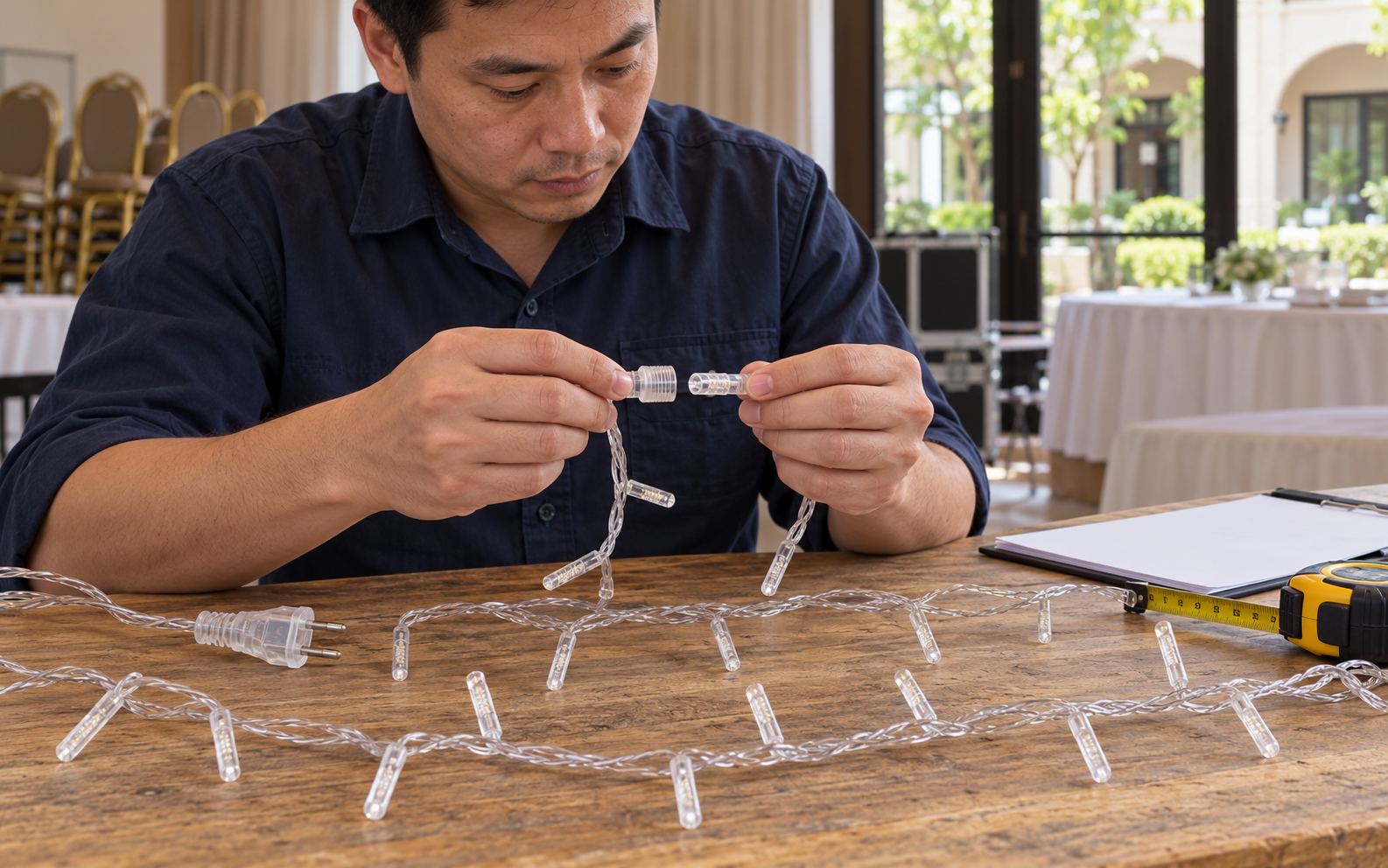
Check LED string light samples against the configuration you intend to buy, not just whether they light up. Measure the illuminated section and lead cable, inspect the cable and molded joints, check connector fit and compare the supplied accessories with the quotation. Then arrange the appropriate functional checks. Record the results and resolve differences before approving production; that record becomes the starting point for shipment inspection.
What Does a Sample Inspection Tell You That a Report Cannot?
A test report records results for identified samples under specified test conditions. It may cover electrical safety, electromagnetic compatibility or ingress protection, depending on its scope. It does not automatically establish that every configuration in a quotation is covered. Our guide to reading LED string light test reports explains how to compare the documents with an order.
A physical sample answers more immediate questions. Is the lead long enough to reach the planned power point? Do the supplied connectors mate correctly? Are there visible defects around the molded light points? These checks complement the technical file; neither replaces the other.
| Review type | What it establishes |
|---|---|
| Test report | Results for the identified samples, standards, conditions and scope recorded |
| Sample inspection | Observed dimensions, workmanship, assembly and function against agreed criteria |
Start with an agreed specification sheet, the quotation or proforma invoice, and an identifiable sample. Record its arrival condition and photograph the string, power equipment, labels and accessories before handling. If there is no fixed model code, use the order reference and configuration details to keep the evidence traceable.
Which Five Checks Should Buyers Make on the Sample?
Carry out dimensional and assembly checks with the equipment disconnected on a dry workbench. Use the product instructions and agreed criteria. Do not open sealed joints, cut the approved reference sample or improvise a water test to fill a gap in the documentation.
Check illuminated length, lead length and LED spacing
Measure the active lighting section separately from the unlit lead. Record LED quantity and spacing, including the measurement points used. Check the dimensions against the agreed tolerances rather than assuming a nominal “10-meter string” describes every part. Try the sample against the intended mounting arrangement without stretching or tightly bending it.
Inspect the cable and confirm its specification
Look for cuts, cracks, uneven surfaces and damage near cable entries. Compare any markings with the agreed conductor and insulation specification. Flexibility by hand does not prove the compound, copper content or UV resistance, and the outside cable diameter does not establish conductor cross-sectional area.
Where conductor size or material verification is required, agree a suitable measurement or test method and supporting records with competent personnel. Use a separate sample if the check is destructive. Keep the approved comparison sample intact, and avoid treating a cable designation alone as evidence of every outdoor performance claim.
Check connectors, seals, caps and accessories
With power disconnected, check that the supplied mating parts engage as instructed without cross-threading or excessive force. Where the design uses seals, check that the correct ones are present, clean and seated properly. Confirm the end cap and lead accessories match the assembly. A similar-looking connector is not necessarily electrically or mechanically compatible.
Correct assembly is important, but it does not verify an IP rating. IEC’s explanation of IP ratings describes protection against dust and liquid ingress. The relevant report and its assembly conditions must match the sample; checking a sealing ring by eye cannot replace that evidence.
Look closely at molded light points and cable entries
Inspect for visible cracks, gaps, exposed conductors, loose parts and molding defects that could affect fit or protection. Record the position and photograph each concern. Surface flash or a mark needs assessment against agreed workmanship criteria; appearance alone cannot establish whether the internal seal is sound.
Arrange a controlled functional check
After the disconnected inspection, have competent personnel confirm the correct supply, controller and protective arrangements. Follow the instructions for laying out and operating the sample; do not energize a tightly wound coil unless that method is expressly permitted. Stop if damage, abnormal operation or a protective-device trip occurs.
Agree the observation period and acceptance method for the product. A one-hour check may be part of that plan, but it is not a universal burn-in requirement or proof of thermal stability. Visible operation alone does not establish flicker performance, acceptable temperatures or electrical safety. Those claims require appropriate methods and criteria.
Record the operating mode and any inconsistent LEDs, brightness or color. Compare color under consistent conditions using the approved reference. Our guide to LED string light colors and order consistency explains why photographs and color names alone are insufficient.
How Should the Sample Inspection Be Recorded?
Use a worksheet that separates the requirement, the method and the actual result. Leave the outcome open until the check is completed. Record “not checked” where evidence is missing instead of assigning a pass because the sample looks satisfactory.
| Check / method | Actual result / notes |
|---|---|
| Lengths and spacing — tape measure | |
| Cable — markings, specification and agreed verification | |
| Connectors and caps — disconnected fit check | |
| Molded joints — visible condition | |
| Power equipment — ratings and compatibility review | |
| Operation and color — agreed controlled check |
For each row, add the sample ID, inspection date, inspector, measured values, acceptance criterion, result and any photograph or document reference. The worksheet is a recording aid, not a completed test record.
If a revised sample changes the cable, connector or electrical arrangement, review the applicable documentation again. Our custom string light test-coverage guide explains why an apparently small change may need further assessment.
How Does an Approved Sample Become the Production Reference?
Once open issues are resolved, identify matching reference samples for buyer and supplier. Label them with the order or configuration reference, revision and approval date, and keep the sign-off record with the specification sheet. Protect the references from damage and record any later use or change.
State in the agreed order documents which features the sample represents and which numerical requirements remain governed by the specification. A sample cannot replace written voltage ratings, dimensional tolerances, test requirements or packaging details. The bulk string light specification checklist helps bring those items together.
Agree the shipment inspection plan as well: what will be checked, how units will be selected and how discrepancies will be handled. Approving one sample does not establish the condition of an entire production batch. Changes after approval should be documented and accepted before they become the new baseline.
Frequently Asked Questions
What should buyers do when a sample fails a check?
Record the requirement and the observed difference with measurements and clear photographs. Ask the supplier to explain the cause and proposed correction, using a corrective action report where appropriate. Review the corrected evidence or replacement sample before approval; do not leave an unresolved difference as a verbal promise.
Does sample approval confirm performance in extreme weather?
No. Sample inspection can identify visible damage and assembly issues. IP65 evidence concerns specified ingress protection, not a guarantee of long-term UV resistance, low-temperature flexibility or wind performance. Check the evidence and installation requirements for each exposure. Our IP65 outdoor application guide explains what the rating covers.
Request Evaluation Samples from OSLENA
Send OSLENA your intended market, application, voltage, illuminated and lead lengths, LED spacing, cable requirements and connector arrangement. Include packaging needs and the checks your team expects to perform. This makes it easier to confirm a relevant sample configuration and the documentation available for review.
Request samples and specifications from OSLENA or explore our commercial decorative lighting solutions. Agree the sample configuration, evaluation method and approval record before moving to the bulk order.
LED String Lights for Your Project
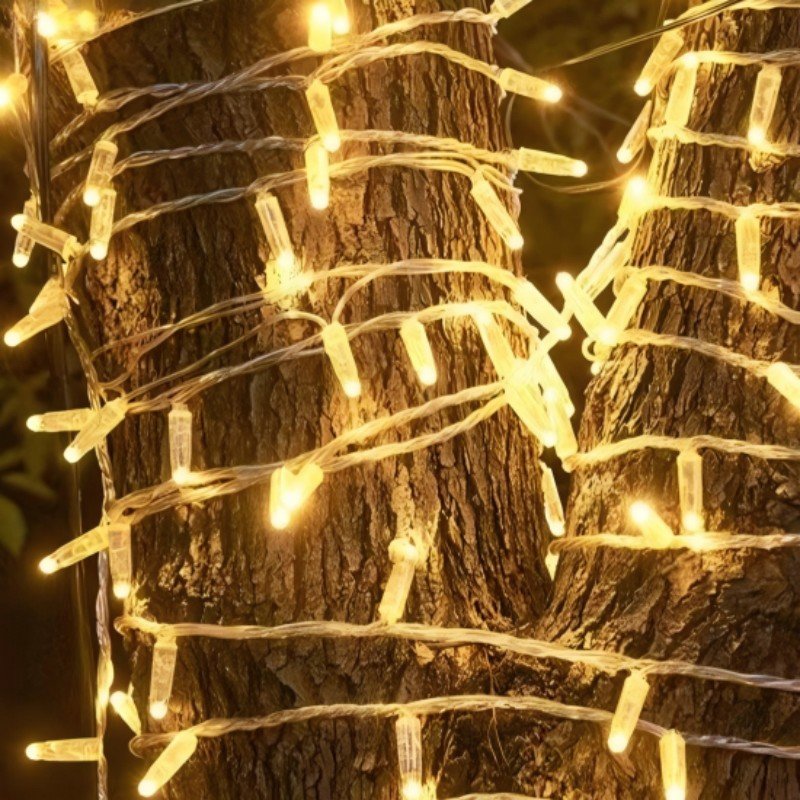
Landscape Tree Wrapping IP65 LED String Lights in Warm White
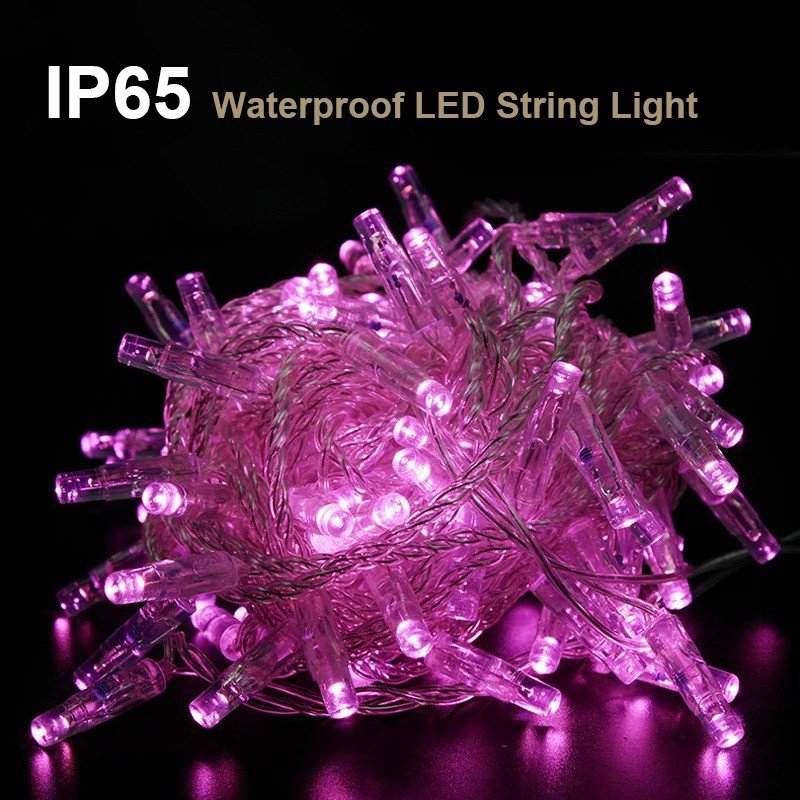
Pink IP65 LED String Lights for Themed Events and Commercial Displays
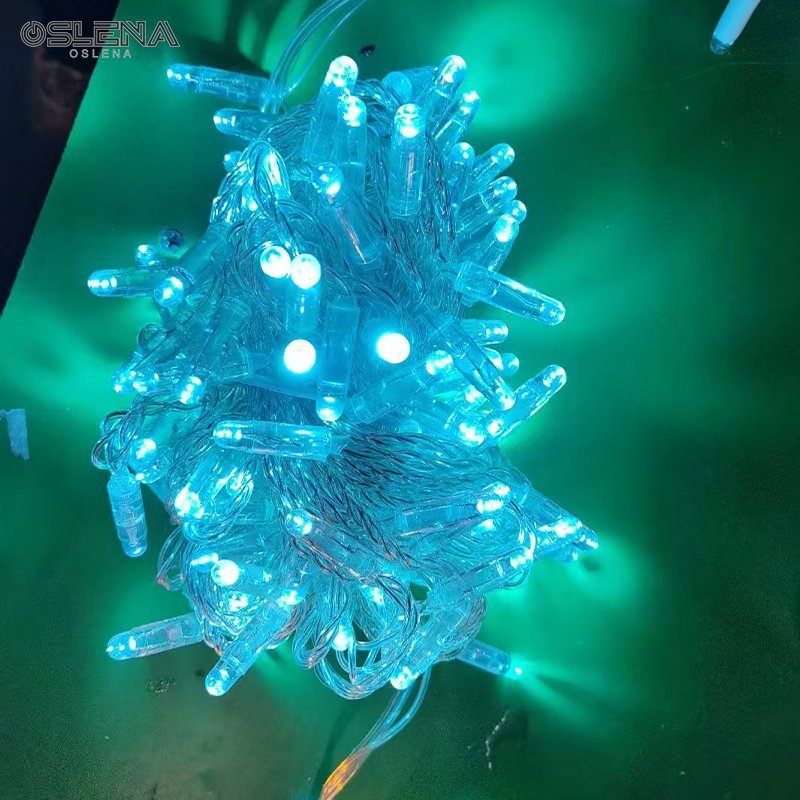
Ice Blue IP65 LED String Lights for Themed Commercial Displays

In This Guide
Let’s Build Your Next Lighting Project
Tell us your application, target market, quantity and customization needs. Our team will recommend the right decorative lighting solution.