
How to Match LED String Lights with Power Supplies and Controllers

To match LED string lights with power supplies and controllers, check the required output type and voltage first, then load capacity, connector wiring and control method. A plug that fits is not proof of compatibility. For outdoor projects, the power supply, controller, connections and installation conditions all need to suit the site. These checks matter just as much when replacing one accessory as when ordering a complete system.
Why Isn’t a Matching Connector Enough?
Two screw-lock connectors can look identical while carrying different voltages, polarities or signals. Never try an unknown combination simply to see whether it lights up. Supplying mains voltage to a low-voltage string can destroy components and create a serious electrical hazard.
Start with three questions: does the accessory provide the electrical output the lights require; can every part carry the connected load; and does the controller use the correct control method? Check the pin assignment as well as the pin count. Connector keying, sealing rings and thread fit also need to match.
Identify the system before choosing an accessory. A mains-voltage string may use a specified rectifier or controller rather than a low-voltage driver. A 24V DC constant-voltage string needs a compatible DC supply; a constant-current LED system needs its specified current and operating voltage range. These are different designs, not interchangeable power options.
What Should You Read on the Power Supply Label?
Read the label on the original accessory together with the light string specification. Input describes the electricity entering the supply; output describes what it delivers to the lights. A wide input range does not mean the output can power strings of any voltage.
| Label item | What to check |
|---|---|
| Input / PRI | Local supply voltage and frequency must fall within the stated input range |
| Output / SEC | Required AC or DC output, voltage, polarity and constant-voltage or constant-current type |
| Output capacity | Rated current and power available under the specified operating conditions |
| Outdoor use | Exposure rating, installation instructions and protection of all connections |
Record the full accessory reference and keep a clear label photograph with the order. For replacement parts, also request the output wiring or pin assignment. If the label is missing or unreadable, ask the supplier to identify the system rather than guessing from its connector.
How Much Power Supply Capacity Do You Need?
Add the rated input power of all strings on that supply, allowing for controller consumption where applicable. Then check the available output at the actual input voltage, ambient temperature and mounting conditions. Some supplies require reduced loading in heat or other conditions; the data sheet explains those limits.
A 48W Load and a 60W Supply: A Worked Example
Assume four compatible constant-voltage strings each draw 12W. Their combined load is 4 × 12W = 48W. If the project specification chooses an 80% loading target, the calculation is 48W ÷ 0.80 = 60W. For a 24V DC example, the strings draw approximately 48W ÷ 24V = 2A, while a 60W, 24V supply has a nominal 2.5A output rating.
These are hypothetical figures, not OSLENA product ratings. An 80% target is a chosen design allowance, not a universal requirement. The selected supply must still meet its temperature limits, startup requirements and permitted load range. A 60W label or an IP67 marking alone does not guarantee cool operation or successful startup.
Power capacity also does not override the maximum end-to-end connection limit. The first lead, connector and controller may reach their limits before the supply does. Use our connection-limit guide to confirm the permitted arrangement for the selected string.
Manufacturer guidance is useful here: the MEAN WELL LED power supply FAQ explains that output type, operating temperature and the specified load conditions affect selection. Apply the documentation for the actual accessory being supplied.
Which Controller Matches Your String Lights?
Choose the controller around the lighting system, not the number of buttons on its remote. Confirm its input and output, supported light type, total current and any per-channel limit. A controller can have enough total wattage yet still be overloaded on one channel.
Single-Color and Multi-Function Strings
A single-color DC string can use PWM dimming only if the string and power supply arrangement support it. Do not assume every single-color string is dimmable. Multi-function two-wire or three-wire strings may rely on a dedicated controller and switching arrangement; replace these with a confirmed compatible unit rather than a generic accessory with the same connector.
RGB and Addressable Strings
Conventional RGB systems need matching channels, common-terminal arrangement and current ratings. Addressable strings need the correct chip protocol, data direction, supply voltage and supported pixel count. An RGB label alone does not establish compatibility. Confirm the exact controller and string combination, including any required signal accessories, before ordering.
Outdoor protection needs the same care. An IP65 light string does not give an attached controller, power plug or open joint the same protection. Select each part for its exposure and follow the assembly instructions. Our IP65 outdoor application guide explains what the rating covers and where installation details matter.
What Information Should You Send for an Accessory Check?
Send photographs of the string label, original power supply, controller and both sides of each connector. Include the order reference or approved configuration, operating voltage, power per set, planned set count and extension lead lengths. Photos help identify the hardware, but wiring and electrical specifications are still needed.
| Check item | Details to confirm |
|---|---|
| Electrical output | AC/DC, voltage, polarity and output type; use the approved specification |
| Load and layout | Power per set, set count, controller limits and all lead lengths |
| Connector and signal | Pin assignment, keying, seals and controller protocol or channels |
| Site and records | Exposure, temperature, mounting and the agreed accessory references |
Before a bulk order, test an agreed sample combination under the intended operating conditions and record the accepted parts. Use our sample inspection guide to check physical fit and assembly, and our test report review guide to check which configuration the documents cover. A successful power-on check alone does not establish electrical safety or an IP rating.
Frequently Asked Questions
Can a Higher-Wattage Power Supply Run a Smaller Load?
Usually, a compatible constant-voltage supply can run a load below its rated maximum: a 24V supply does not force its full current rating through a 24V string. Confirm any minimum load, operating mode, protection and dimming requirements. This does not apply in the same way to constant-current drivers, and a larger wattage rating does not automatically extend service life.
Can Accessories from Different Batches Be Used Together?
Yes, if the supplier confirms the same electrical and mechanical specification. Compare output type, voltage, polarity, pin assignment, load capacity, control protocol and seals. A batch number by itself neither proves nor rules out compatibility. Record the approved accessory references so later replacements can be checked against them.
Can Power Supplies and Controllers Go Inside a Junction Box?
They can when their installation instructions permit it and the enclosure is suitable. Check heat dissipation, internal spacing, mounting, cable glands and condensation as well as water protection. A sealed IP67 box can trap heat, so it is not an automatic solution for every driver or controller. Keep connections clear of standing water and have mains wiring and protection selected by a qualified installer.
Discuss Your Power Supply and Controller Requirements with OSLENA
For a new display or an extension to an existing installation, send OSLENA the accessory labels, connector photos, required lighting functions and planned layout. Include the destination market and site exposure so the available power supply and controller options can be checked against the selected string configuration.
Ask for the proposed accessory references, loading conditions, connection limits and applicable technical documents to be listed with the quotation. Submit your power and controller requirements to OSLENA, or explore our commercial outdoor lighting solutions to discuss the wider project.
LED String Lights for Your Project
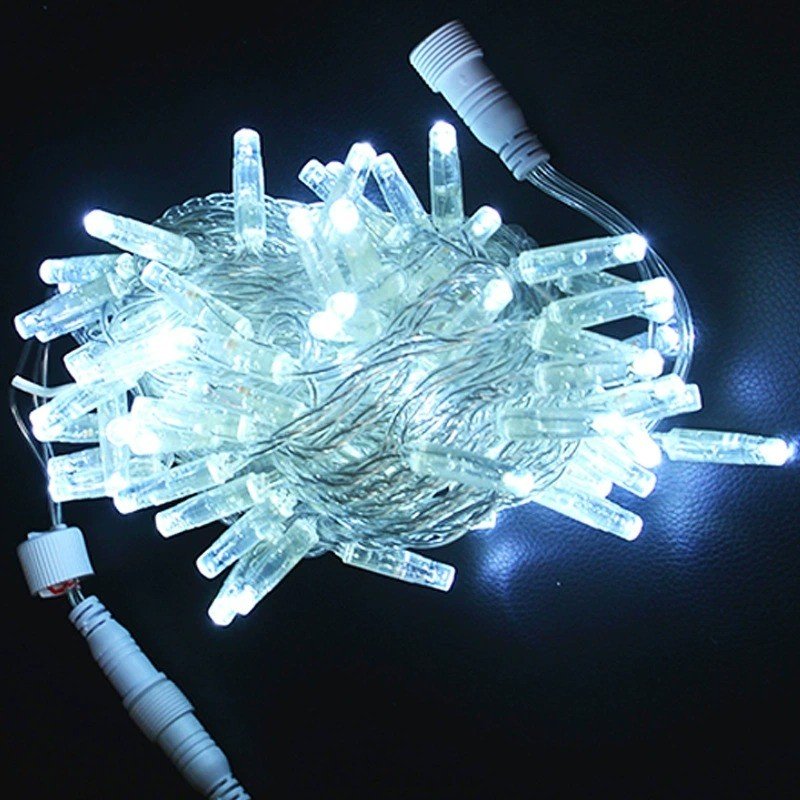
Ice White IP65 LED String Lights for Christmas and Winter Décor
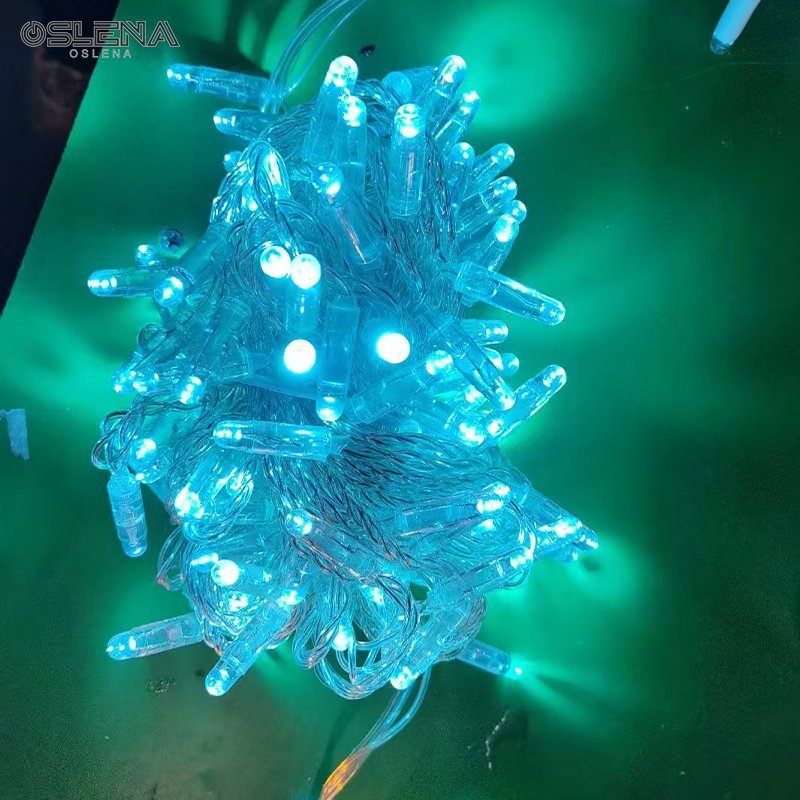
Ice Blue IP65 LED String Lights for Themed Commercial Displays
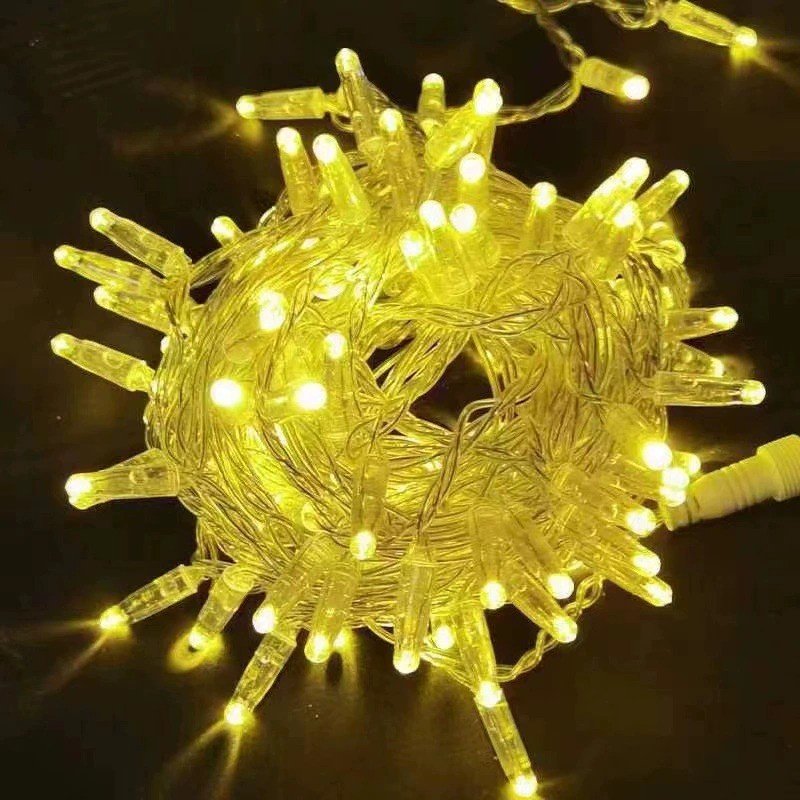
Warm White IP65 LED String Lights for Seasonal Display Supply

In This Guide
Let’s Build Your Next Lighting Project
Tell us your application, target market, quantity and customization needs. Our team will recommend the right decorative lighting solution.