
How Much String Lighting Do You Need for Commercial Tree Wrapping?
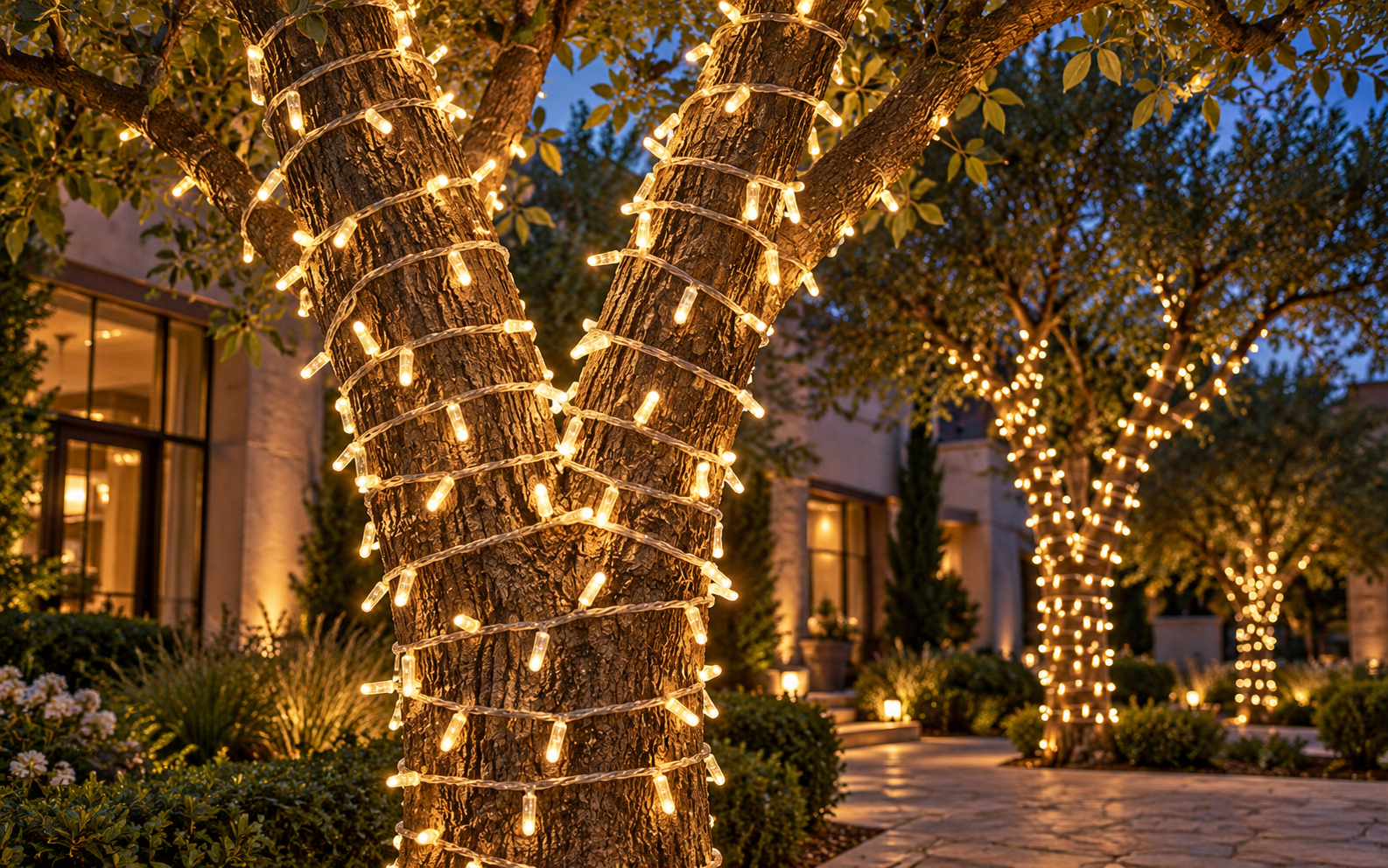
Tree height alone is not enough to estimate commercial tree wrap lights. Measure the trunk circumference, the height you want to wrap, the main branches and the route to the power connection. Then choose the spacing between turns. These measurements give you a working quantity to check with a trial wrap before ordering for the whole site.
What Should You Measure Before Estimating?
Start with a tree schedule: give each tree an ID and group similar trees, while noting any that differ in trunk size or branch shape. Measure the area that will actually be lit, rather than the full height of the tree.
| Measurement | Why it matters |
|---|---|
| Trunk circumference (C) | Cable needed for a turn around the trunk |
| Wrapped height (H) | Vertical area to be covered |
| Wrap pitch (P) | Distance between successive turns |
| Branch dimensions | Record each selected branch’s circumference and wrapped length |
| Power route | Unlit lead route from the supply to the first light point |
Keep illuminated length and lead wire length separate. Illuminated length is the cable section carrying LEDs; the lead is the unlit connection to the first light point. A five-metre route from the supply is not automatically another five metres of decorative lighting. Follow the planned cable route, including changes in height, rather than measuring only the straight-line distance.
How Do You Calculate the String Length?
Start with a quick estimate
For a roughly cylindrical trunk, divide the wrapped height by the wrap pitch to estimate the number of turns. Multiply that number by the circumference. Use metres for every measurement.
Turns (N) = wrapped height (H) ÷ wrap pitch (P).
Quick length estimate = N × circumference (C).
This is a useful budgeting shortcut, not an exact spiral calculation. The cable travels upward as it circles the trunk, so each turn is slightly longer than the circumference. For a uniform helix around a cylinder, use:
Spiral length = (H ÷ P) × √(C² + P²).
This geometric estimate assumes constant circumference and even pitch. It excludes cable transitions between sections, connector allowances, unlit leads and spare stock. For a tapered or irregular trunk, divide the wrapping area into shorter sections, measure a representative circumference for each and add the estimates.
Worked example: one trunk and three branches
Suppose the trunk circumference is 1.2m, the wrapped height is 3m and the pitch is 0.10m (10cm). The quick calculation gives 3 ÷ 0.10 = 30 turns, then 30 × 1.2 = 36m. The spiral calculation gives approximately 36.12m.
Now add three branches. Each has a representative circumference of 0.6m and a wrapped length of 1.5m, measured along the branch. At the same 0.10m pitch, each needs 15 turns: approximately 9m by the quick method, or 9.12m using the spiral calculation.
The quick total is 36m + 27m = 63m. The spiral total, calculated before rounding, is approximately 63.50m. Both describe the same assumed tree; neither is a final purchase quantity. Branch forks, cable routes, fixed segment lengths and spares still need to be accounted for.
What Is the Difference Between Wrap Pitch and LED Spacing?
Wrap pitch is the distance between successive turns along the trunk or branch. LED spacing is the distance between light points along the cable. They control different parts of the appearance.
For the same trunk and wrapped height, reducing pitch from 10cm to 5cm roughly doubles the required cable length. Changing LED spacing can increase the number of light points without changing how far apart the cable turns sit on the tree.
A 10cm wrap pitch is an example, not an optimum for every project. Judge the effect from the intended viewing distance, with the site’s existing lighting. A sample tree helps confirm the appearance, cable quantity and fixing method together.
How Do You Turn the Estimate into a Purchase Order?
Match the required coverage to the available segment lengths. For example, a 63.5m geometric estimate cannot simply be ordered as three 20m strings. Decide how the trunk and branches will be divided, where sections will connect and where any extra lit length can be accommodated. Do not assume a string can be cut on site.
Record voltage, cable details, segment lengths, connectors and end caps in the order sheet. Our bulk LED string light specification checklist explains the details to confirm. Total metres do not establish the permitted number of sets on one supply; obtain the limit for the selected configuration.
Choose the electrical arrangement for the site, including public access and supply positions. OSLENA’s confirmed voltage options include 24V, 110–120V and 220–240V; confirm AC/DC requirements and the matching power equipment for the order. Qualified electrical personnel should check the supply and protection arrangements.
Keep installation allowances separate from maintenance spares. One covers measured routes, transitions and segment rounding; the other provides compatible replacements. A provisional 5–10% allowance can be shown as a planning assumption if useful, but it is not a universal commercial standard or a substitute for a trial wrap. Agree the final quantities from the layout and service needs.
Wrap one representative tree before committing the full site quantity. Record the lengths used and compare them with the estimate. Our commercial holiday lighting installation guide covers cable support, connection protection and maintenance access.
What Should Your Tree Measurement Record Include?
The worksheet below uses the simplified circumference-times-turns method. T-01 uses the branch dimensions in the worked example. T-02 includes the trunk only. T-03 has a 75m trunk estimate, but its branch dimensions are still missing, so a complete total cannot yet be given. All figures are illustrative.
| Tree and measurements | Quick estimate |
|---|---|
| T-01 — C 1.2m; H 3m; pitch 10cm; 3 branches as in worked example | 63m total |
| T-02 — C 0.8m; H 2.5m; pitch 10cm; no branches | 20m trunk |
| T-03 — C 1.5m; H 4m; pitch 8cm; 4 branches with dimensions missing | 75m trunk only |
Add separate fields for branch measurements, the power route, segment selection, installation allowances and maintenance stock. For each branch, record its circumference, wrapped length and pitch. Keep the trial-wrap result beside the estimate so the purchasing team can see why the final order differs.
Frequently Asked Questions
Why can two trees of the same height need different quantities?
Their trunk circumferences, wrapped areas and branch layouts may differ. At the same wrapped height and pitch, a 1.5m circumference needs about 1.88 times the cable of a 0.8m circumference under the quick estimate. Overall tree height does not capture those differences.
Should branches be calculated separately?
Yes. Measure the wrapped length along each selected branch and use its own circumference and pitch. This makes the quantity traceable and helps plan connections at the forks. Treat taper and irregular shapes as additional estimation limits.
How much reserve should a commercial project carry?
There is no single percentage for every layout. Confirm the trial-wrap difference, segment rounding and replacement needs separately. A project with easy local replenishment may need a different spare plan from a remote venue with a fixed opening date.
Send Your Tree Schedule to OSLENA
For a hotel courtyard, shopping plaza or park project, send OSLENA the tree quantities, measurements, photographs and preferred wrapping density. Include the light color, cable requirements, destination market and power locations. We can discuss the product configuration and quantities against that schedule.
For exposure and connection considerations, read our IP65 outdoor application guide. Send your project tree schedule to OSLENA or explore our commercial decorative lighting solutions.
LED String Lights for Your Project
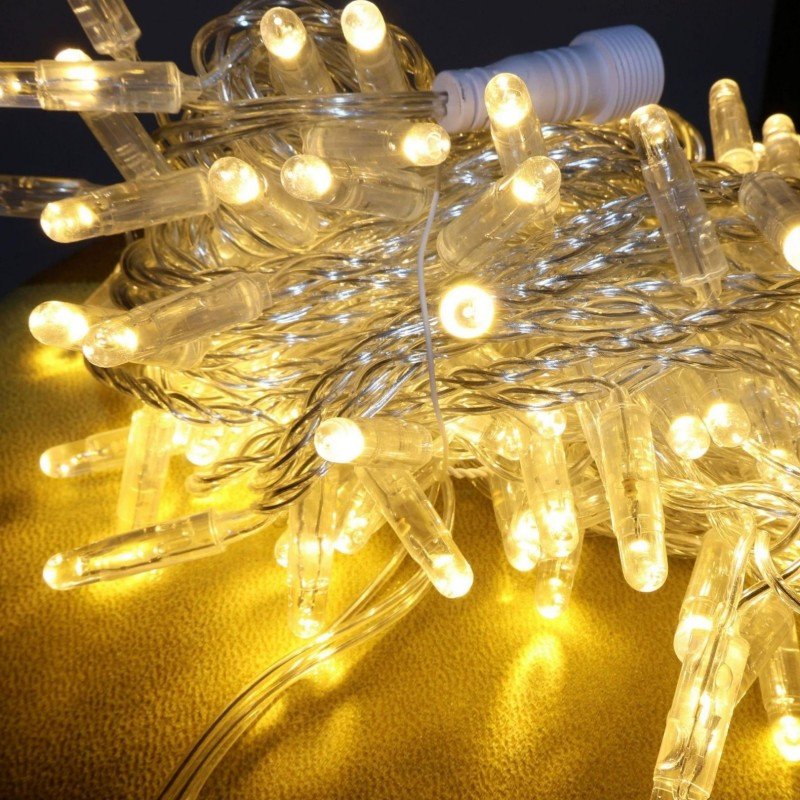
Clear Cable Warm White IP65 LED String Lights for Custom Installations
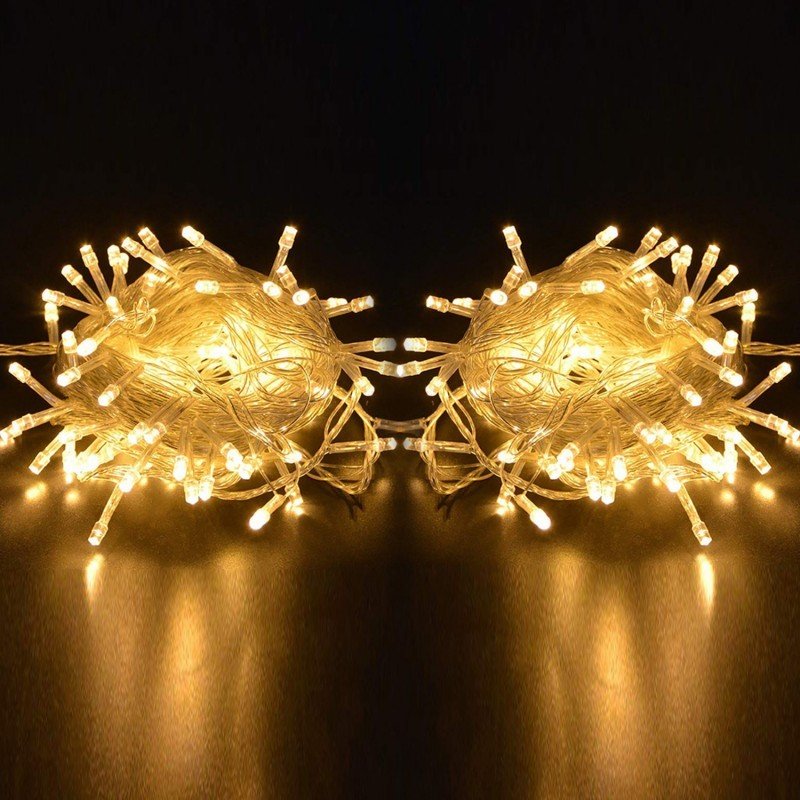
Bulk Warm White IP65 LED String Lights for Retail and Event Stock
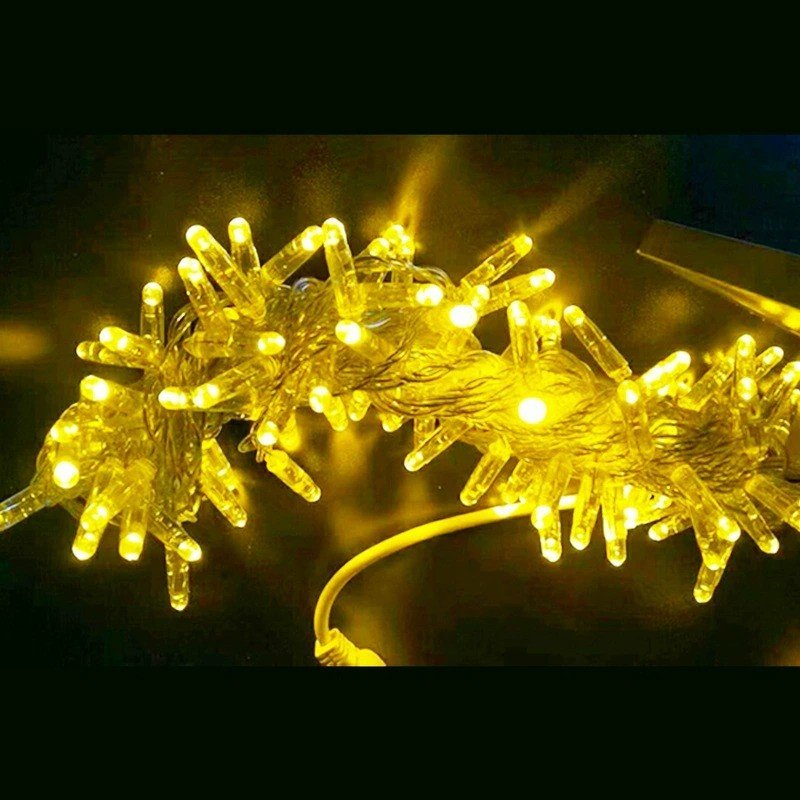
Golden Yellow IP65 LED String Lights for Event and Venue Decoration

In This Guide
Let’s Build Your Next Lighting Project
Tell us your application, target market, quantity and customization needs. Our team will recommend the right decorative lighting solution.