
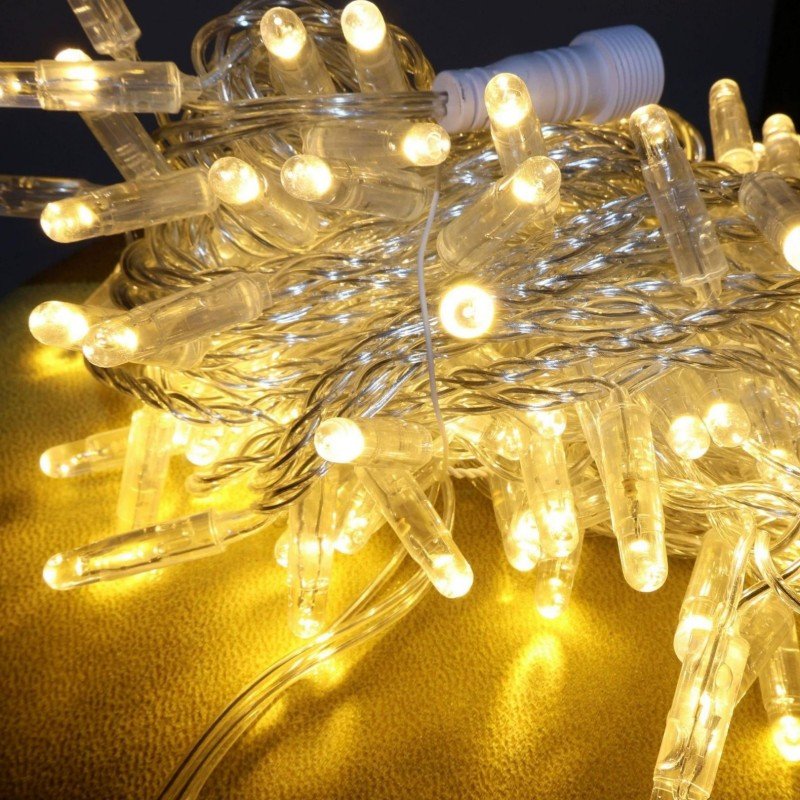
Clear Cable Warm White IP65 LED String Lights for Custom Installations
Clear-cable warm white IP65 LED string lights for custom commercial decoration, event structures and project-based installation.
TECHNICAL SPECIFICATIONS
Built for Commercial Decorative Lighting
Key specifications can be configured according to your market and project needs.
| Input Voltage |
110–120V ,220–240V ,24V |
|---|---|
| IP Rating |
IP65 |
| Light Color |
Warm White |
| Total Length |
100M ,10M ,20M ,30M ,50M |
| LED Quantity |
100 LEDs ,1000 LEDs ,200 LEDs ,300 LEDs ,500 LEDs ,800 LEDs |
| Cable Color |
Black ,Transparent ,White |
| Cable Material |
PVC ,Rubber |
| Bulb Type |
LED |
| Connectable Quantity |
5–6 Sets |
| Control Mode |
8 Modes ,Steady On |
Using Clear-Cable String Lights in Custom Fabrication
Clear-cable warm white IP65 LED string lights can follow sculptures, pale frames, window features and camera-facing event props. Transparent is the listed cable choice to select for a clear-cable version; the wider table also lists Black and White. PVC and Rubber are material choices, to be specified for the offered version. Review actual cable visibility, connector construction, measured routes and the selected electrical arrangement against the fabricator’s substrate and assembly plan. A transparent cable is not a promise that the complete installation will be invisible.
Decide Why Clear Cable Is Necessary
Transparent wire can reduce contrast on glass, acrylic or pale surfaces, yet it is not invisible under every condition. Reflection, dust and shadows may still reveal it. Designers should state whether the goal is daytime discretion, photographic cleanliness or compatibility with a light-coloured frame. This determines how strictly a sample needs to be evaluated.
Test the Cable on the Actual Substrate
Place a representative sample against the same acrylic, metal, paint or fabric used in the finished structure. Review it under daylight and venue lighting, both switched on and off. A clear cable that works on one material may look obvious on another. Record the approved combination instead of treating transparency as a universal performance claim.
Map Curves, Corners and Feed Points
Custom forms contain bend points and returns that a front-view measurement can miss. Trace the full route, identify the feed position and separate illuminated length from non-illuminated lead. For modular props, measure each component. A route drawing gives OSLENA a better basis for discussing strand sizes, wire flexibility and connector placement.
Coordinate With the Fabrication Workshop
The workshop should confirm channels, holes, clips or other support methods before the light specification is fixed. If the strand must pass through an opening, connector dimensions become relevant. Avoid forcing wire around sharp edges or sealing joints where they cannot be serviced. The final mounting solution remains the fabricator’s site-specific responsibility.
Manage Connectors as Visible Components
A transparent cable can draw more attention to an opaque connector. Show where connectors may be hidden within the prop and how technicians will access them. Connector design, cable transition and lead length stay To Be Confirmed. These details should be reviewed with the visual team, not left solely to a late electrical decision.
Apply IP65 to the Correct Product Area
The listed light strand has an IP65 rating for outdoor decorative use. The complete custom feature may contain power supplies, controllers, plugs and joints with separate exposure requirements. Fabricators and installers must protect and position those components appropriately. IP65 does not mean a sealed prop can trap water around unreviewed connections.
Ordering Clear-Cable Lights for a Custom Build
Custom fabricators, visual-merchandising studios and specialist project suppliers can request versions aligned with component drawings. OSLENA confirms warm white and IP65 on this listing. Voltage, power, plug, control, linked run, string length, LED count, spacing, cable construction, connectors, packaging and documents become final only through the approved specification.
Separate Prototype and Production Decisions
A prototype should establish cable visibility, warm-white appearance, point spacing, bend behaviour and connector placement. Record any workshop adjustment before volume supply. Approval of the visual prototype does not automatically approve a different voltage or controller, so technical and aesthetic records must identify the same version before manufacturing is released.
Create Component-Level Product Codes
If a sculpture uses several strand sizes, assign a code to each component and place those codes on the drawing. This allows inspection and packing to match the workshop assembly sequence. A stable definition also helps order replacement parts without sending the entire prop back or relying on a photograph to identify an internal light run.
Pack as an Assembly Kit
Cartons can be organised by prop, module or construction stage, with labels corresponding to drawings. Fragile clear wire and visible connectors need suitable inner protection. Distribution programmes may require another unit pack or private label. Final instructions, artwork and carton marks depend on quantity and whether assembly occurs in a factory, venue or customer workshop.
Inspect Visual and Functional Details
Quality checks should verify illumination, cable appearance, assembly, connectors, electrical operation, selected functions, version labels and kit contents. Any test or conformity document must correspond to the exact market and electrical build. No universal cable-invisibility claim, warranty, lead time or linking capacity is inferred from the close-up image.
Send a Fabrication-Focused RFQ
Provide the country, prop drawings, substrate samples or photographs, component routes, dimensions, viewing conditions and quantity. Add voltage, plug, warm-white target, spacing, connector location, lead length, control, kit packing and documentation. State prototype and production deadlines separately so review and approval time are visible.
Complete the Drawing and Sample Review
Before production, approve the prototype reference, product codes, electrical version, connector positions and packing map. Confirm responsibility for channels, fixings and outdoor joint protection. Ask for MOQ, timing, warranty and document availability after the full custom brief is understood, then preserve the approved files for repairs or later reproduction.
Let’s Build Your Next Lighting Project
Tell us your application, target market, quantity and customization needs. Our team will recommend the right decorative lighting solution.